From Schools to Workplaces
For decades, cannabis has existed in Trinidad and Tobago in a space filled with contradiction. It has been used quietly in households for wellness, spirituality, creativity, and relief—yet publicly treated as taboo, misunderstood, or even dangerous. As laws evolve and conversations shift, one thing has become increasingly clear: education is the missing link in the cannabis industry.
Cannabis education in Trinidad is no longer optional—it is essential. Whether for medical use, recreational consumption, economic opportunity, or public health, the future of cannabis depends on how well people understand it. Without education, stigma thrives. With education, communities make informed choices, industries grow responsibly, and misuse declines.
Cannabis Education Is About Knowledge, Not Promotion
One of the biggest misconceptions surrounding cannabis education is the belief that talking about cannabis automatically promotes use. This mindset has held Trinidad back from meaningful progress. Education does not encourage consumption—it encourages understanding.
Cannabis education covers:
- The difference between medical and recreational cannabis
- How cannabinoids like THC and CBD affect the body
- Responsible use and dosage awareness
- Mental health considerations
- Legal frameworks and workplace policies
- Cultural, historical, and economic context
When people are informed, they are far less likely to abuse substances and far more likely to use them responsibly—or choose not to use them at all.
Medical Cannabis: Education Saves Lives
Medical cannabis education is critical in Trinidad, where many people still self-medicate without guidance. Patients dealing with chronic pain, anxiety, PTSD, epilepsy, cancer-related symptoms, and sleep disorders often turn to cannabis with little understanding of strains, delivery methods, or interactions with other medications.
Without education:
- People overconsume THC and experience anxiety or paranoia
- Patients use the wrong strain for their condition
- Edibles are misused due to delayed onset
- Medical benefits are dismissed after poor experiences
With education:
- Patients learn the difference between indica, sativa, and hybrid strains
- CBD is recognised as a non-intoxicating therapeutic option
- Tinctures, oils, vaporisers, and topicals are used correctly
- Doctors, pharmacists, and patients can speak the same language
Cannabis education empowers patients to advocate for their health rather than experiment blindly.
Recreational Cannabis: Harm Reduction Through Education
Recreational cannabis use already exists in Trinidad—it always has. The difference now is that society has the opportunity to address it honestly instead of pretending it doesn’t happen.
Cannabis education for recreational use focuses on harm reduction, not judgment. This includes:
- Understanding tolerance and personal limits
- Avoiding impaired driving or operating machinery
- Knowing the effects of mixing cannabis with alcohol
- Learning how edibles differ from smoking
- Respecting shared spaces and non-users
Countries that have invested in cannabis education have seen lower rates of misuse, fewer emergency room visits, and better public behaviour around consumption. Trinidad can benefit from the same approach.
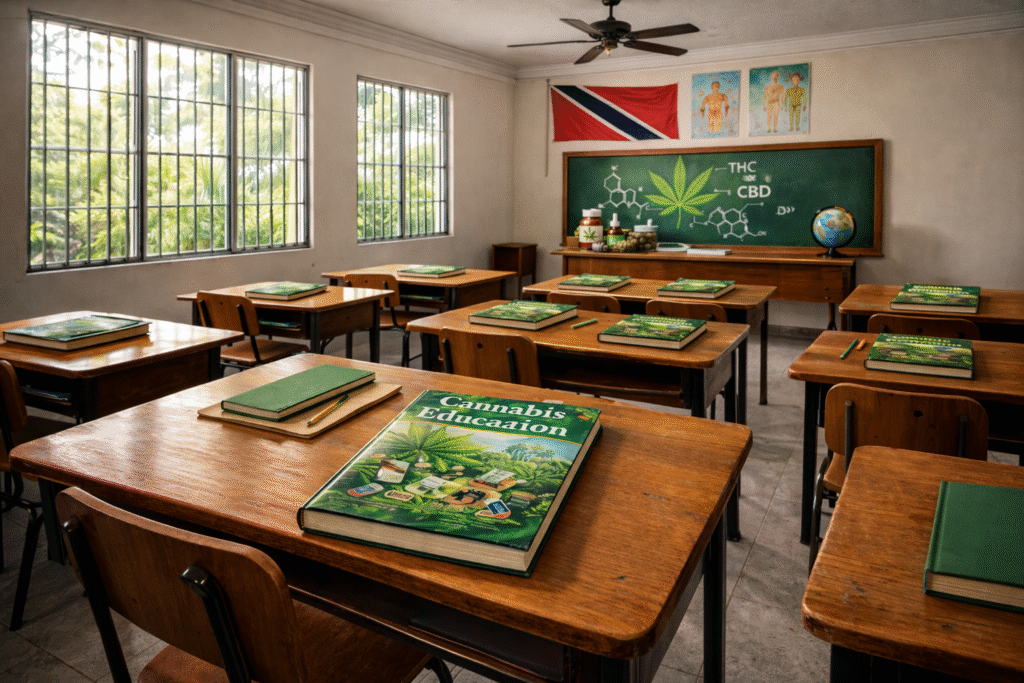
Why Cannabis Education Should Start in Schools
If cannabis education is to succeed, the education system must be the first sector to adopt it.
Schools already teach students about alcohol, tobacco, and sexual health. Cannabis should not be excluded simply because of outdated stigma. Age-appropriate, science-based cannabis education prepares young people for real-world decisions.
In schools, cannabis education should focus on:
- Brain development and age-related risks
- Mental health awareness
- Peer pressure and decision-making
- Legal consequences and responsibilities
- Cultural and historical context in Trinidad
This does not mean encouraging students to use cannabis. It means equipping them with facts before misinformation reaches them through social media or peers.
When schools lead the conversation, families feel more confident continuing it at home.
Cannabis Education in the Workplace Is Long Overdue
As cannabis becomes more accepted globally, workplaces in Trinidad must adapt. Employers and employees alike are often confused about what is allowed, what is safe, and what is fair.
Cannabis education in the workplace helps:
- Clarify company policies
- Reduce discrimination and bias
- Address safety-sensitive roles responsibly
- Support employees using medical cannabis
- Prevent misunderstandings and conflict
A well-educated workplace can balance productivity, safety, and compassion. Employees should not be forced to choose between treatment and employment due to ignorance or outdated policies.
Education creates structure where confusion once existed.
Economic Growth Depends on Education
The cannabis industry has the potential to become a meaningful economic sector in Trinidad—through cultivation, processing, wellness products, research, and tourism. However, no industry can grow without an educated workforce.
Cannabis education opens doors to:
- Formal training programs
- Quality control and compliance
- Research and innovation
- Entrepreneurship and small business development
- Export-ready standards
From farmers to formulators, marketers to medical professionals, education ensures the industry grows responsibly and sustainably—not recklessly.
Breaking Cultural Stigma Through Conversation
Cannabis has deep cultural roots in the Caribbean, yet colonial narratives framed it as deviant rather than medicinal or spiritual. Education allows Trinidad to reclaim its narrative.
When communities understand:
- The history of cannabis in Caribbean culture
- Its role in wellness and spirituality
- The difference between use and abuse
Stigma begins to fade. Open conversations replace whispers. Shame is replaced with discernment.
Education is how societies heal from misinformation.
The Role of Parents, Educators, and Leaders
Cannabis education cannot live in silos. It requires collaboration across sectors:
- Parents willing to talk honestly with children
- Educators trained with accurate information
- Healthcare professionals updating their knowledge
- Employers revisiting outdated policies
- Policymakers prioritizing public education
Trinidad has the opportunity to lead the Caribbean in cannabis education by choosing transparency over fear.
Moving Forward: Education First, Always
Cannabis is neither a miracle cure nor a menace—it is a plant with benefits, risks, and responsibilities. The difference between empowerment and harm lies in education.
By prioritising cannabis education in Trinidad:
- Medical patients receive better care
- Recreational users make safer choices
- Youth are protected through knowledge
- Workplaces operate with clarity
- The industry grows ethically
Education should always come before regulation, before commercialisation, and before judgment.
The future of cannabis in Trinidad does not depend on whether people use it—it depends on whether they understand it.
Stay High & Stay Safe
Asha & Ayanna Wadada