— And How It Affects Trinidad & Tobago and the Rest of the World
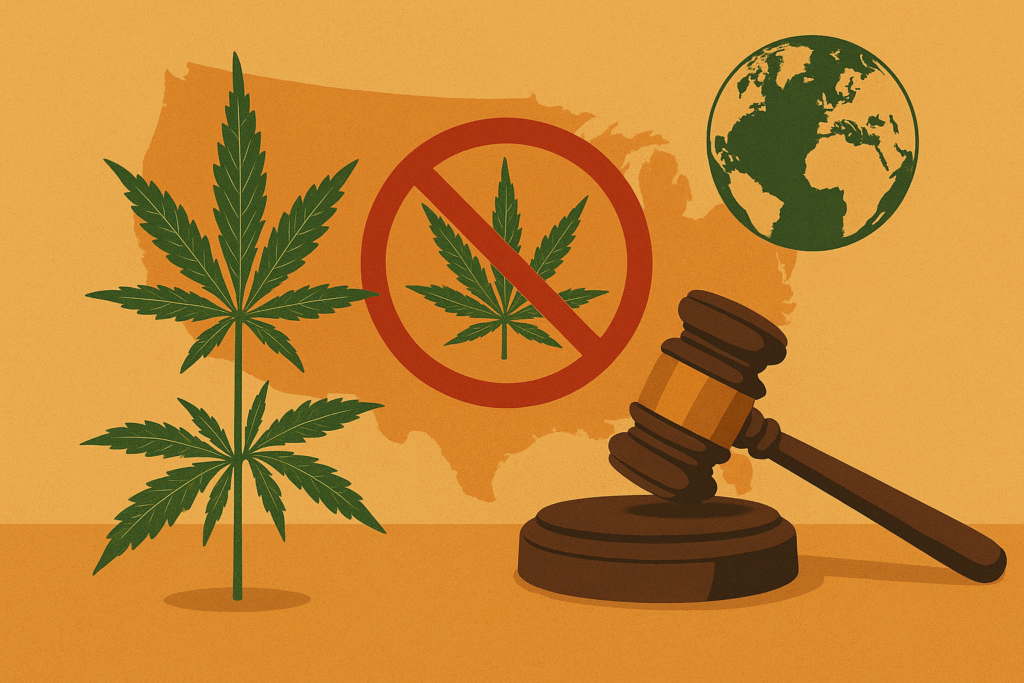
When the United States updates its cannabis laws, the whole world feels it. And recently, the U.S. shook things up again with a new move many people are calling a “hemp ban,” tied to changes in their next Farm Bill. This shift targets hemp-derived cannabinoids—especially Delta-8 THC, Delta-10, THCP, and other psychoactive compounds that became popular after the 2018 Farm Bill legalized hemp.
For years, the American hemp market exploded because manufacturers could extract these cannabinoids from legal hemp, bypassing federal marijuana laws. But now, the U.S. wants to close that loophole by redefining what hemp is allowed to contain.
This blog breaks down what the new U.S. hemp restrictions actually mean, why they matter globally, and how they could impact Trinidad and Tobago, our cannabis economy, our consumers, and our future industry. And because this is a Ladies of 420 piece — we’ll keep it easy to read, straight to the point, and full of insight for Caribbean cannabis lovers.
What Exactly Is Happening in the U.S.?
To understand the “hemp ban,” you need to know the foundation:
The 2018 Farm Bill
- Made hemp federally legal if it has ≤0.3% Delta-9 THC.
- Did not regulate newly discovered cannabinoids like Delta-8, Delta-10, HHC, etc.
- Companies used legal hemp to extract or synthesize these cannabinoids, creating a massive gray-market industry.
This loophole created:
- A multi-billion-dollar U.S. hemp-cannabinoid market
- Thousands of small businesses
- A wave of unregulated THC-like edibles and vapes in gas stations, convenience stores, and online shops
- A lot of controversy
So what’s the new bill about?
The updated version of the U.S. Farm Bill aims to:
- Ban or heavily restrict intoxicating hemp-derived cannabinoids
- Tighten the definition of “legal hemp”
- Control the sale and manufacturing of psychoactive hemp products
- Bring these products under the same rules as cannabis (marijuana)
In simple terms:
The U.S. wants to treat euphoric hemp products the same way it treats weed.
Why?
Because lawmakers claim the market became too big, too fast, and too unregulated — especially with minors getting access to Delta-8 products sold outside legal dispensaries.
What This Means for Americans
For people living in the U.S., the new hemp rules mean:
1. No more “gas-station weed.”
Products like Delta-8 gummies and vapes could disappear almost overnight.
2. Tighter testing and tracking
Hemp companies will now have to follow strict cannabis-style regulations.
3. Business shutdowns
Thousands of hemp retailers and manufacturers could close depending on how strictly the rule is enforced.
4. Price increases
If intoxicating cannabinoids move into the regulated cannabis market, expect higher prices due to taxes, licensing fees, and compliance rules.
5. More consistency in products
Consumers may finally see:
- Clear dosage labels
- Lab testing
- Age restrictions
Basically, safer products — but fewer cheap ones.
How This Affects the Global Cannabis Industry
Even though this is a U.S. law, it ripples worldwide. The U.S. is a giant in cannabis advocacy, legalization trends, research, and manufacturing.
Here’s how the rest of the world will feel it:
1. Countries often follow the U.S.
When the American government tightens rules on cannabinoids, many regions — especially the EU, Latin America, and the Caribbean — may adopt similar standards.
2. Global trade will shift
Countries exporting hemp-derived products to the U.S. (like Colombia, Uruguay, Thailand, Canada) may need to adjust:
- THC thresholds
- Extraction methods
- What products they can legally ship
3. International definitions will start changing
Right now, there’s no globally unified definition of “hemp” vs. “cannabis.”
The U.S. change could influence:
- Labelling laws
- Testing standards
- Acceptable THC limits
4. Research may shift toward non-intoxicating cannabinoids
Such as:
- CBD
- CBG
- CBN
- CBC
This could redirect investment and scientific focus worldwide.
5. Black markets may grow
If legal hemp-derived THC disappears, underground labs may try to fill the demand — globally.
What This Means for Trinidad & Tobago
Now the juicy part: How does this U.S. hemp change affect Trinidad and Tobago specifically?
Even though cannabis is still in the decriminalization / early reform stage here, the U.S. decision impacts us in several ways:
1. Trinidad’s Hemp Industry Plans Will Be Influenced
T&T has been exploring the idea of a hemp industry for:
- Agriculture diversification
- Export potential
- Local product development
But now, with the U.S. restricting hemp cannabinoids:
- Export opportunities shrink
- Investors may rethink profit models
- Local regulations may shift to match U.S. standards
If the U.S. bans intoxicating hemp derivatives, T&T might preemptively block them too to stay aligned with major trade partners.
2. Importing Hemp Products Into Trinidad Will Change
A lot of Trinidad cannabis users buy:
- CBD oils
- Delta-8 vapes
- Hemp gummies
- Hemp-derived wellness products
Many of these come from the U.S.
If U.S. companies stop making them:
- Trinidad’s supply drops
- Prices go up
- Options become limited
- People may turn to Canada or Europe
- More untested products may come through Miami or courier channels
This directly affects pharmacies, wellness stores, smoke shops, and online retailers.
3. It Influences Trinidad’s Future Cannabis Legislation
Trinidad is watching:
- Jamaica
- St. Vincent & the Grenadines
- Barbados
- The U.S.
- Canada
The U.S. restricting hemp cannabinoids may push Trinidad to:
- Mirror those restrictions
- Set clearer THC thresholds
- Prepare for a stricter licensing system
- Regulate hemp-derived edibles and vapes early
- Avoid the U.S. “loophole chaos”
- Fast-track full cannabis regulation instead of a hemp-only model
Instead of encouraging a hemp gray market, T&T might jump straight into a structured cannabis market.
4. Tourism and the Caribbean Cannabis Image
If hemp-derived THC products become illegal to fly with or carry in U.S. airports:
- Trinidadians traveling to Miami, New York, or Houston will face stricter rules
- Tourists entering Trinidad will be more cautious
- Caribbean destinations may lean into regulated cannabis tourism to fill the gap
A U.S. hemp crackdown pushes more cannabis tourists toward:
- Jamaica
- Barbados
- Thailand
- Netherlands
- Canada
And if Trinidad ever legalizes adult-use?
We could benefit from that shift too.
5. More Pressure on Trinidad to Create a Real Cannabis Market
The U.S. cracking down may force regional governments, including T&T, to:
- Finalize cannabis regulations
- Support local growers
- Invest in labs and testing infrastructure
- Develop export strategies
- Create a standardized THC definition
If not, the Caribbean risks falling behind.
So What’s the Bigger Picture?
The U.S. hemp ban isn’t just about Delta-8 vapes disappearing from gas stations.
It’s a major international signal that:
Intoxicating cannabinoids derived from hemp will no longer be treated lightly.
Governments want:
- Structure
- Safety
- Testing
- Age restrictions
- Clear labeling
- Proper licensing
And the Caribbean — including Trinidad & Tobago — will have to play catch-up.
What Trinidad Cannabis Consumers Should Know
Whether you use cannabis for wellness, creativity, stress relief, or recreational vibes, this U.S. shift affects you.
Expect:
- Fewer U.S. hemp-based products online
- Higher prices for anything imported
- Stricter customs screening
- More unregulated “street” alternatives
- A slower flow of new cannabinoid innovations
But also:
- A push for safer, properly tested products
- Pressure on the government to open a legal cannabis industry
- More Caribbean-made products on the horizon
Final Thoughts
The new U.S. hemp restrictions are a turning point in global cannabis law. They close a loophole, but they also set a new worldwide standard for how hemp cannabinoids should be treated.
For Trinidad & Tobago, this means:
- Our cannabis future will now be shaped by how we respond
- Our hemp plans must adapt
- Our consumers must stay informed
- Our policymakers must act quickly
- Our local cannabis entrepreneurs must prepare for a more regulated market
The world is moving fast — and the Caribbean can’t afford to get left behind.
Ladies of 420 will keep watching the changes, explaining them, and guiding our community every step of the way
Stay High & Stay Safe
Asha & Ayanna Wadada